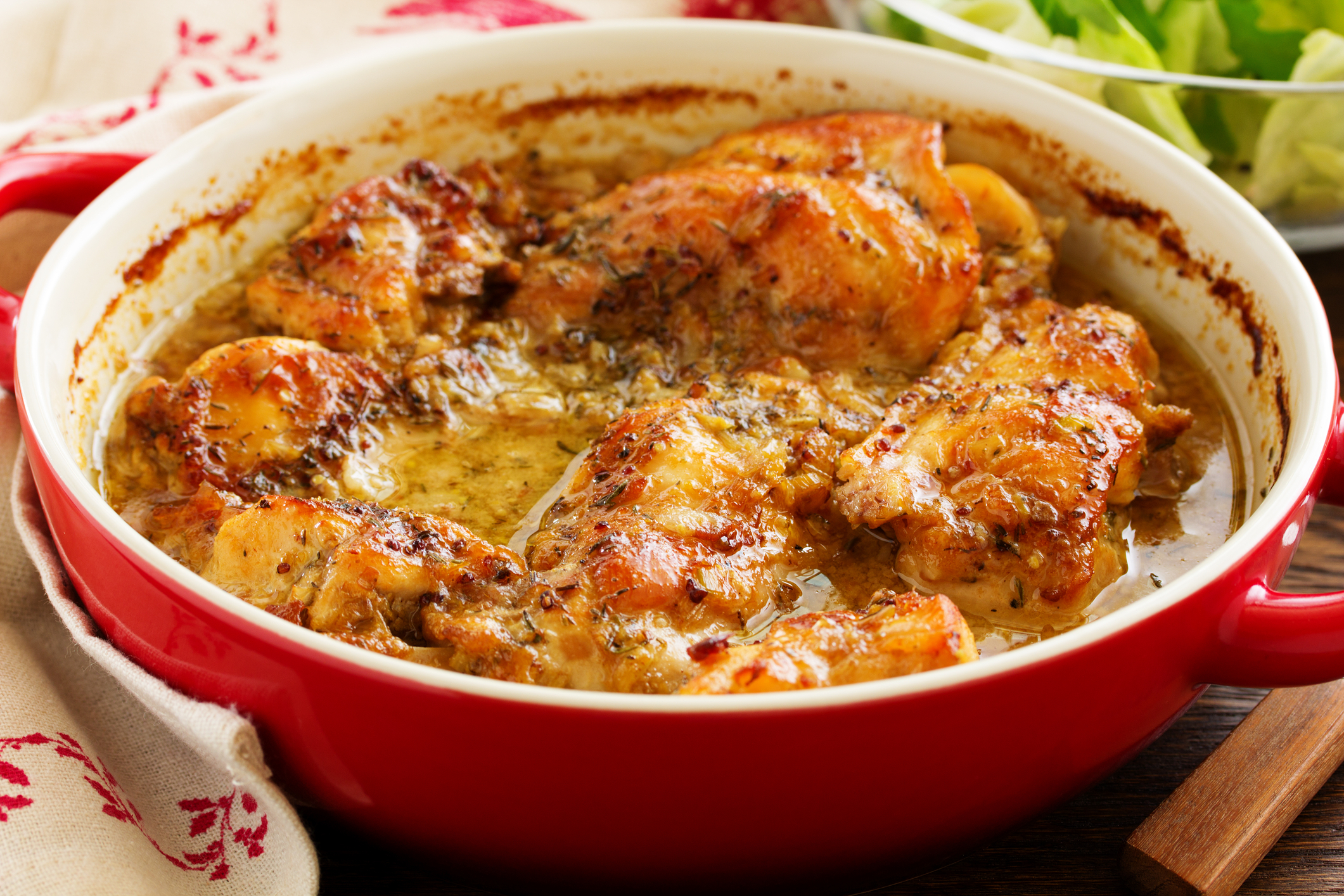
I left it in three minutes too long. The herbs went from crispy to black. Still ate it. Said nothing.
Not the recipe’s fault. I was distracted. But that’s the thing about rabbit—it punishes inattention. A chicken gets tough and you shrug. Rabbit gets tough and you’ve wasted forty bucks.
First time I made this, my husband asked what it was. I told him chicken. He ate two servings. Found out later and laughed. That’s honey mustard for you—it covers a multitude of sins.
Why Rabbit?
Everyone asks this. Like it’s a dare.
I started cooking rabbit because my local butcher stocks it and no one buys it. Marked down. Alone in the case. I felt bad for it. Now I buy it on purpose.
Tastes like the best parts of chicken and duck had a baby. Leaner than both. Takes on mustard and honey better than pork does.
And it’s not hard. That’s the part nobody tells you. The fear is worse than the cooking.
Honestly? Not that deep.
About the Sauce
The honey-mustard sauce is the whole point. Two mustards—whole grain and Dijon—plus honey and balsamic. The ratio matters more than you think.
I’ve made this with just Dijon. Boring. One-dimensional. The whole grain mustard adds texture and those little pop-in-your-mouth seeds. Don’t skip it.
Watch the honey. Three tablespoons is the sweet spot. I once used five. The sauce tasted like dessert on meat. My daughter pushed it around her plate. Didn’t say why. I knew.
The balsamic cuts through. Don’t skip that either.
The Herbs Are the Hard Part
They go in the pot, whole, during roasting. Thyme and rosemary. On top of the rabbit. They release oil into the sauce while it cooks.
Pulling them out at the end is satisfying. Like archaeology. You extract the stems and the leaves have mostly fallen off into the sauce.
But the crispy part? That’s me being extra. After the rabbit comes out and rests, I throw extra thyme leaves and rosemary needles into a hot pan with butter. Thirty seconds. They crisp up. Sprinkle on top.
Or they burn. Like they did for me today.
Quick tip: Pull the herbs from the pan the second they go from bright green to matt. There’s no recovery time.
When It Sticks to the Pan
Rabbit is lean. It wants to stick. You brown it, then braise it, and somewhere in between the fond builds up on the bottom of the pot. That’s good. That’s flavor.
But too much heat and it burns. Then the sauce tastes bitter. Fix it before adding stock by deglazing with a splash of water or wine. Scrape the bottom. If you wait until after you add the stock, you’re just stirring burnt bits into the sauce.
I’ve done both. I know which one works.
Don’t Rush This Part
Browning the rabbit takes patience. Eight to ten minutes total. You’re not cooking it through—you’re building crust. The crust holds the sauce. Without it, the meat dries out in the oven.
I once rushed this step. I wanted dinner on the table. The rabbit came out of the oven pale and dry. The sauce tasted okay. The meat was stringy and sad. I’ve made worse. But not by much.
Work in batches if you have to. Don’t crowd the pot. If the pieces touch, they steam instead of brown. That’s physics, not opinion.
How to Make It
Step 1: Preheat your oven to 180°C (350°F). Pat the rabbit pieces dry with paper towels. Salt and pepper generously. Don’t skip the drying. Wet meat won’t brown.
Step 2: In a bowl, whisk together whole grain mustard, Dijon, honey, balsamic vinegar, and minced garlic. Taste it. (And yes, I tried it with honey alone and it was flat. Don’t.)
Step 3: Heat olive oil in a large ovenproof Dutch oven over medium-high heat. Brown the rabbit pieces in batches—about three minutes per side. Don’t move them too early. Let the crust form, then flip. (I learned this the hard way after peeling skin off the pan.)
Step 4: Remove rabbit and set aside. Sauté the sliced onion in the same pot until softened—about four minutes. Scrape up any fond while you stir.
Step 5: Return rabbit to the pot. Pour the honey-mustard sauce over everything. Add stock, thyme, and rosemary sprigs. Stir gently. No aggression needed.
Step 6: Cover and roast for 40–45 minutes. The meat should pull away from the bone when you poke it with a fork. If it doesn’t, give it five more minutes. (My first time, I pulled it at 35 minutes and had to put it back. Embarrassing.)
Step 7: Remove from oven. Discard herb sprigs. If you want a thicker sauce, mix cornstarch with water and stir in, simmering for two minutes on the stovetop. I usually skip this—the sauce reduces enough on its own.
Step 8: Taste and adjust salt and pepper. Serve immediately. Have you ever cooked rabbit before? Share below!
Ways to Change It Up
Try this: Swap the honey for maple syrup. It tastes earthier. Works well with rosemary.
Try this: Add sliced apples or pears to the pot before roasting. They soften and sweeten the sauce. My husband ate around them once. Rude, but not my problem.
Try this: Use rabbit legs only. I’ve done this for small dinners. Fewer bones, more meat. Roast for 30 minutes instead of 40.
Which would you go for? Drop it in the comments.
How to Serve It
Serve it on crusty bread to soak up the sauce. Or over rice—basmati works best because it doesn’t clump. Roasted carrots or parsnips on the side. The sweetness matches the honey.
I once served it with mashed potatoes because I had a bag of them. Good choice. The sauce pools in the mashed potato divots.
What would you pair it with?
Storing It Without Ruining It
Leftovers go in the fridge in an airtight container. They last three days max. Rabbit is lean—it dries out fast.
Reheat in a pan with a splash of water or stock. Low and slow. Microwave will toughen it. I’ve done it when I was desperate. Regret it every time.
Freezer option? Yes. Cooked rabbit freezes for up to three months. Thaw overnight in the fridge. Reheat in the sauce—don’t drain it.
Have you ever saved leftovers like this? Tell me below!
Mistakes I Made So You Don’t Have To
1. Overcooked it. I once left it in the oven for an hour. The meat was edible but stringy. Rabbit doesn’t have much fat to keep it moist. Stick to the 40-minute mark.
2. Used too much honey. I already mentioned this. The sauce becomes cloying. It coats your tongue and sticks around. I once added orange juice to fix it. Didn’t work. Less is more.
3. Forgot the garlic. I had a head of garlic. I was in a rush. I left it out. The sauce tasted flat. A few days later I made it again with garlic and the difference was huge. Don’t skip the garlic.
I once tried to brown rabbit straight from the fridge. The outside cooked too fast, the inside stayed cold. Let it sit at room temperature for 20 minutes first. Did something like this happen to you?
Your Rabbit Questions, Answered
Is rabbit hard to cook? No. It’s like chicken but leaner. The only difference is you have to watch the cook time more closely. I overcooked my first one and it was fine—just not great.
Where do I buy rabbit? Butcher shops. Sometimes farmers’ markets. Frozen rabbit works too—thaw fully first. I’ve used frozen and nobody noticed.
Can I use chicken instead? Yes. Chicken thighs work best. Same cook time. But it won’t taste the same. Rabbit has a cleaner flavor.
Do I have to brown it? Yes. Skipping this step means dry meat. I’ve tried. It’s not worth it. But I understand the temptation.
How do I know when it’s done? When the meat pulls away from the bone easily. Or internal temperature hits 74°C (165°F). I use the fork test. Works every time.
Can I make this ahead? You can, but it’s better fresh. The sauce thickens and the meat dries out slightly upon reheating. If you must, reheat with extra stock. But don’t tell anyone I said that.
Which answer helped you most?
One Last Thing
I made this for dinner tonight. My daughter ate two pieces. My husband asked if we could have it again next week. The herbs on top were black, but I crumbled them off and nobody saw.
Sometimes the meal turns out exactly right. Sometimes it burns and you eat it anyway. This one is worth the risk.
Will you make this soon?
Happy cooking! —Danielle Monroe
Fun fact: Rabbit meat is one of the leanest animal proteins—just 3% fat per serving. That’s why it dries out so fast if you overcook it.
Honey Mustard Roast Rabbit with Crispy Herbs
Ingredients
- 1 whole rabbit (2-2.5 kg), jointed into pieces
- 3 tablespoons whole grain mustard
- 3 tablespoons Dijon mustard
- 4 tablespoons honey
- 2 tablespoons olive oil
- 1 tablespoon balsamic vinegar
- 4 cloves garlic, minced
- 1 medium onion, sliced
- 250 ml chicken or vegetable stock
- 2 sprigs fresh thyme
- 2 sprigs fresh rosemary
- Salt and pepper to taste
- 1 tablespoon cornstarch (optional, for thickening)
- 2 tablespoons water (if using cornstarch)
Instructions
- 1Preheat oven to 180°C (350°F).
- 2Pat rabbit pieces dry with paper towels and season generously with salt and pepper.
- 3In a bowl, whisk together both mustards, honey, balsamic vinegar, and minced garlic until well combined.
- 4Heat olive oil in a large ovenproof Dutch oven over medium-high heat.
- 5Brown rabbit pieces on all sides for 8-10 minutes total, working in batches if necessary. Set aside.
- 6In the same pot, sauté sliced onion until softened, about 4 minutes.
- 7Return rabbit pieces to the pot and pour the honey-mustard sauce over them.
- 8Add stock, thyme, and rosemary sprigs. Stir gently to combine.
- 9Cover and transfer to the preheated oven. Roast for 40-45 minutes until rabbit is tender.
- 10Remove from oven and discard herb sprigs.
- 11If desired, mix cornstarch with water to create a slurry and stir into sauce to thicken. Simmer on stovetop for 2-3 minutes.
- 12Season with additional salt and pepper to taste.
- 13Serve hot with crusty bread, roasted vegetables, or rice.
Notes
See full recipe for nutritional information.