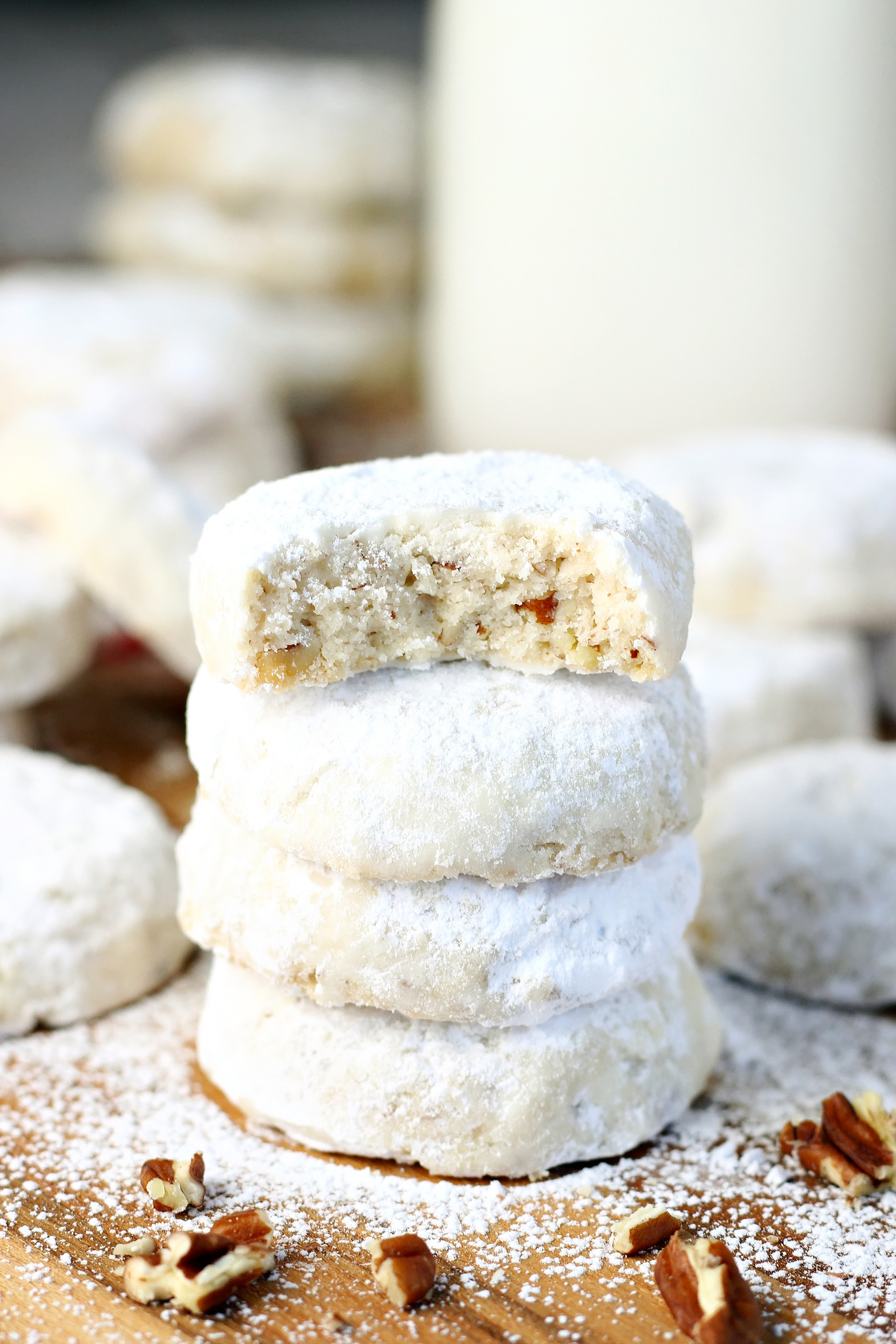
I’d been craving those store-bought pecan sandies for weeks. The ones in the red package. You know. Crumbly, almost sandy, with that powdered sugar dusting that gets all over your shirt. I thought, how hard could they be?
Harder than I wanted them to be. Not in a complicated way—just fiddly. The dough feels wrong at every stage. Too soft. Too greasy. Too fragile. You have to trust the process.
I don’t trust processes easily. But I kept going. And they came out right. Mostly.
The Butter Situation
This recipe leans hard on butter. Two sticks. That’s not a suggestion. You need it softened, not melted, not cold. I left mine out for an hour and it was still firm in the center.
I microwaved it for ten seconds. Barely. And it was fine. Don’t overthink that step. If it’s soft enough to press a finger into without resistance, you’re there.
My problem was I creamed it too long. Thought I was being thorough. Instead I made the dough too airy, and the cookies spread into flat discs. Still tasted fine. But they looked like little pale pancakes.
Next time I stop at two minutes. Maybe less.
The Pecan Problem
I used whole pecans and chopped them myself. That was a choice. It was fine, but some pieces were too big. You want them fine—almost like coarse sand. Bigger bits break the crumbly texture. The cookie falls apart around them instead of through them.
My husband picked out a pecan chunk and ate it separate. Said nothing. That’s his way of telling me I messed up.
Honestly? Not that deep. But next time I’ll buy pre-chopped or run them through the food processor. Two pulses. No more.
About the Powdered Sugar
Roll them while they’re warm. Not hot. Not cold. Warm enough that the sugar sticks but doesn’t melt into a paste. I learned this the hard way.
First batch cooled completely before dusting. The sugar sat on top like talcum powder. Looked dusty, not delicate. Second batch I rolled them straight out of the oven. Melted. Sticky mess.
Third batch was the charm. Let them sit on the baking sheet for five minutes. Then roll gently. The sugar adheres in a thin, even layer. That’s the look you want.
They Looked Done. They Weren’t.
These cookies don’t brown like normal cookies. The edges get slightly golden, but the centers stay pale. That’s correct. If you wait for the tops to brown, they’ll be overbaked and dry.
I pulled mine at thirteen minutes. Edges just barely changed color. Centers still soft. They firmed up as they cooled. Perfect texture—crumbly but not dry, buttery without being greasy.
One batch I left in fourteen minutes because I second-guessed. They were edible. Just less good. Less tender. More like a shortbread that forgot it was supposed to be something else.
Quick tip: Set a timer for twelve minutes. Check. If the edges look even slightly darker than the center, take them out. Trust that.
I’ve made worse.
The Texture Thing
Crumbly doesn’t mean dry. There’s a difference. These cookies should break apart when you bite them, not disintegrate into dust. The butter keeps them cohesive. The pecans provide the crunch.
If yours are crumbly in the wrong way—like sandy and falling apart—you either overbaked or under-buttered. Add a tablespoon of cream next time. Or chill the dough longer before baking.
Or don’t. They’re cookies. They’ll still taste good.
How to Make It
Step 1: Preheat the oven to 325°F. Not 350. I know it’s tempting to crank it up. Don’t. These need a slow, gentle bake. Line two baking sheets with parchment. You’ll thank yourself later when nothing sticks.
Step 2: Cream the butter and granulated sugar. Two minutes. Maybe three. Stop when it’s light and fluffy, not when it looks like whipped frosting. I went too long once. Learned my lesson. (The color should be pale yellow, not white.)
Step 3: Beat in the vanilla until combined. That’s it. Not complicated. Just get it mixed in.
Step 4: Whisk the flour and salt together in a separate bowl. This matters. You want them evenly distributed, not having to stir aggressively later. Aggressive stirring develops gluten. Gluten makes these cookies tough. You don’t want that.
Step 5: Add the flour mixture to the butter mixture gradually. I do it in three additions. Mix just until the flour disappears. Stop. Seriously, stop. Overmixing is the enemy here.
Step 6: Fold in the pecans. Use a spatula. Gentle strokes. The pecans won’t distribute perfectly—that’s fine. Some cookies will have more, some less. That’s part of the charm. Have you ever had a cookie with a single perfect pecan piece and wished it had more? Me too.
Step 7: Roll the dough into 1-inch balls. My hands were slightly warm. The dough stuck a little. It’s okay. Place them two inches apart on the baking sheets. They spread, but not much.
Step 8: Gently flatten each ball with the bottom of a glass. Dip the glass in powdered sugar first, or the dough sticks. I learned this after smashing three cookies into sticky blobs. You’re welcome.
Step 9: Bake for 12-15 minutes. Check at twelve. Seriously. The edges should just barely be golden. The centers will look pale and underdone. That’s exactly right. I told myself this while hovering near the oven like a nervous parent.
Step 10: Let them cool on the baking sheet for five minutes. They’re fragile right now. Moving them too soon will break them. I know. I broke three. They went into a bowl for “testing.”
Step 11: Transfer to a wire rack and cool completely. Or mostly. You want them just warm for the sugar dusting. Not cold. Not hot. Warm.
Step 12: Put the powdered sugar in a shallow bowl. Roll each cookie gently. Tap off the excess. They should look snowy, not caked. What’s your go-to dusting method? Share below!
Step 13: Store in an airtight container for up to five days. They’ll soften slightly over time. If you want them crunchy longer, add a piece of bread to the container. The bread absorbs moisture. It works. Don’t ask me why.
Ways to Change It Up
Try this: Swap half the pecans for toasted almonds or walnuts. The flavor shifts. Still crumbly. Still good.
Try this: Add a teaspoon of cinnamon or cardamom to the flour. Warmer spice. Works well with coffee.
Try this: Skip the powdered sugar entirely and dip the cooled cookies in melted dark chocolate. Let them set. That’s a different cookie, but a good one.
Which would you go for? Drop it in the comments.
How to Serve It
With black coffee. That’s the classic. The bitterness balances the sweetness.
Or with cold milk. My daughter pushed hers around her plate until she dipped one in milk. Then she ate the whole batch.
Or crumbled over vanilla ice cream. Like a deconstructed cookie sundae. It works. What would you pair it with?

Storing It Without Ruining It
Room temperature in an airtight container. Five days max. They’ll soften after day three but still taste fine.
Fridge? I don’t recommend it. The fridge dries them out. They lose that buttery crumble and turn.. dusty. Not good.
Freezer works. Freeze baked cookies in a single layer on a sheet pan, then transfer to a freezer bag. Three months. Thaw at room temperature for about twenty minutes. Re-crisp in a 300°F oven for five minutes if needed.
You can also freeze the dough. Roll into balls, freeze on a sheet pan, bag them. Bake straight from frozen—add two minutes to the time. Have you ever saved leftovers like this? Tell me below!
Mistakes I Made So You Don’t Have To
Mistake one: I over-creamed the butter. I thought “light and fluffy” meant five minutes. It didn’t. Two to three minutes. That’s it. The cookies spread way too much and went flat. They still tasted buttery, but the texture was wrong. More like a thin shortbread. Not what I wanted.
Mistake two: I once used salted butter and added the full amount of salt. The cookies were borderline too salty. Not ruinous. But you noticed it. If you only have salted butter, reduce the added salt to a pinch. Or leave it out entirely. The pecans have enough salt on them naturally.
Mistake three: I used a food processor for the pecans and let it run too long. I ended up with pecan butter. The cookies were greasy and heavy. Pulse the pecans. Two pulses. Check. If they’re not fine enough, one more pulse. That’s all it takes. Did something like this happen to you?
Your Questions, Answered
Can I use a different nut? Yes. Walnuts, almonds, even pistachios work. The texture changes slightly. Walnuts are softer. Almonds add more crunch. Adjust the chopping accordingly.
Why are my cookies not crumbly? Too much flour or overmixing. The gluten developed. They’re more like a standard cookie. That’s not bad. But it’s not a sandie. Next time, measure flour by spooning it into the cup and leveling off. Don’t scoop straight from the bag.
Can I make these gluten-free? I tried this once and swapped the all-purpose flour for a 1:1 gluten-free blend. Worked fine. The texture was a bit more delicate—crumbly in a fragile way. I’d add an extra tablespoon of butter to compensate. But if you do, you’re testing it. I’m not promising perfection.
How do I get the powdered sugar to stick better? Roll the cookies while they’re just warm. Not hot. Not cold. Warm. If they’ve cooled completely, lightly brush them with water or milk first. But that’s fiddly. Honestly, just warm is the easiest path.
Why did my cookies spread into each other? Dough was too warm, or the baking sheet was hot. Chill the dough for 20 minutes before rolling. Or cool your baking sheets between batches. I use two sheets and rotate them. One bakes, one cools. Works every time.
Can I double the recipe? Yes. But don’t double the mixing time. Keep creaming to two minutes. And split the dough into two bowls when folding in the pecans. Just makes it easier. Which answer helped you most?
One Last Thing About These Cookies
I made these on a Tuesday afternoon for no reason. No holiday. No party. Just wanted something to eat with my coffee.
They sat in a tin on the counter for three days. Nobody complained. Nobody finished them, either. That’s the thing—these aren’t cookies you devour. They’re cookies you eat slowly, one at a time, with something to drink. They last.
I’m not sure that’s a problem. Some recipes are for feeding a crowd. Some are for Tuesday afternoons when the house is quiet.
I still don’t love how the dough feels. But I love how they turn out. That’s the deal with a lot of things.
Try them once. You’ll either figure them out or decide they’re not your thing. Both outcomes are fine.
Will you make this soon?
Happy cooking! —Danielle Monroe
Fun fact about pecans: Pecans are the only major tree nut native to North America. They’re not actually a nut botanically—they’re a drupe, like a peach. So you’re basically eating a peach stone covered in butter. Doesn’t sound as good, but it tastes better.
Buttery Homemade Pecan Sandies Crumbly Cookies Recipe
Ingredients
- 1 cup (2 sticks) butter, softened
- 3/4 cup granulated sugar
- 1 teaspoon vanilla extract
- 2 cups all-purpose flour
- 1/4 teaspoon salt
- 1 1/2 cups finely chopped pecans
- 1 cup powdered sugar for dusting
Instructions
- 1Preheat oven to 325°F (160°C).
- 2In a large bowl, cream together softened butter and granulated sugar until light and fluffy, about 2-3 minutes.
- 3Beat in vanilla extract until well combined.
- 4In a separate bowl, whisk together flour and salt.
- 5Gradually add the flour mixture to the butter mixture, mixing until just combined.
- 6Fold in the finely chopped pecans until evenly distributed.
- 7Roll dough into 1-inch balls and place on ungreased baking sheets about 2 inches apart.
- 8Gently flatten each ball slightly with the bottom of a glass.
- 9Bake for 12-15 minutes until edges are lightly golden but centers remain pale.
- 10Allow cookies to cool on baking sheet for 5 minutes.
- 11Transfer to wire rack and cool completely.
- 12Place powdered sugar in a shallow bowl and gently roll or dust warm cookies with powdered sugar until fully coated.
- 13Store in an airtight container for up to 5 days.
Notes
See full recipe for nutritional information.